René Kühn: Dear Henryk, it’s great that we’re once again talking about the current challenges, and welcome to our “MarTech Talk” format. The good thing is that B2B is always two years behind, so you can simply look at the 2024 scenario with B2C marketers to see what’s current. Or how do you see it?
Henryk Börngen: Hello, dear René, nice to see you. You’re starting with an interesting thesis, and I agree with you—until a few years ago, the gap was even bigger in some marketing and especially MarTech aspects. I remember a conference a few years ago where a B2C data specialist talked about performance marketing. Most B2B companies certainly still can’t operate at that level today. But the requirements and objectives are changing fundamentally right now. Driven by changing customer requirements, multi-channel sales strategies, new business models (keyword: servitization), and continued cost pressure, there is a clear increase in speed and catching up.
René Kühn: In this context, would you briefly explain which division at Continental you work in and what you do all day? Which areas are under your leadership?
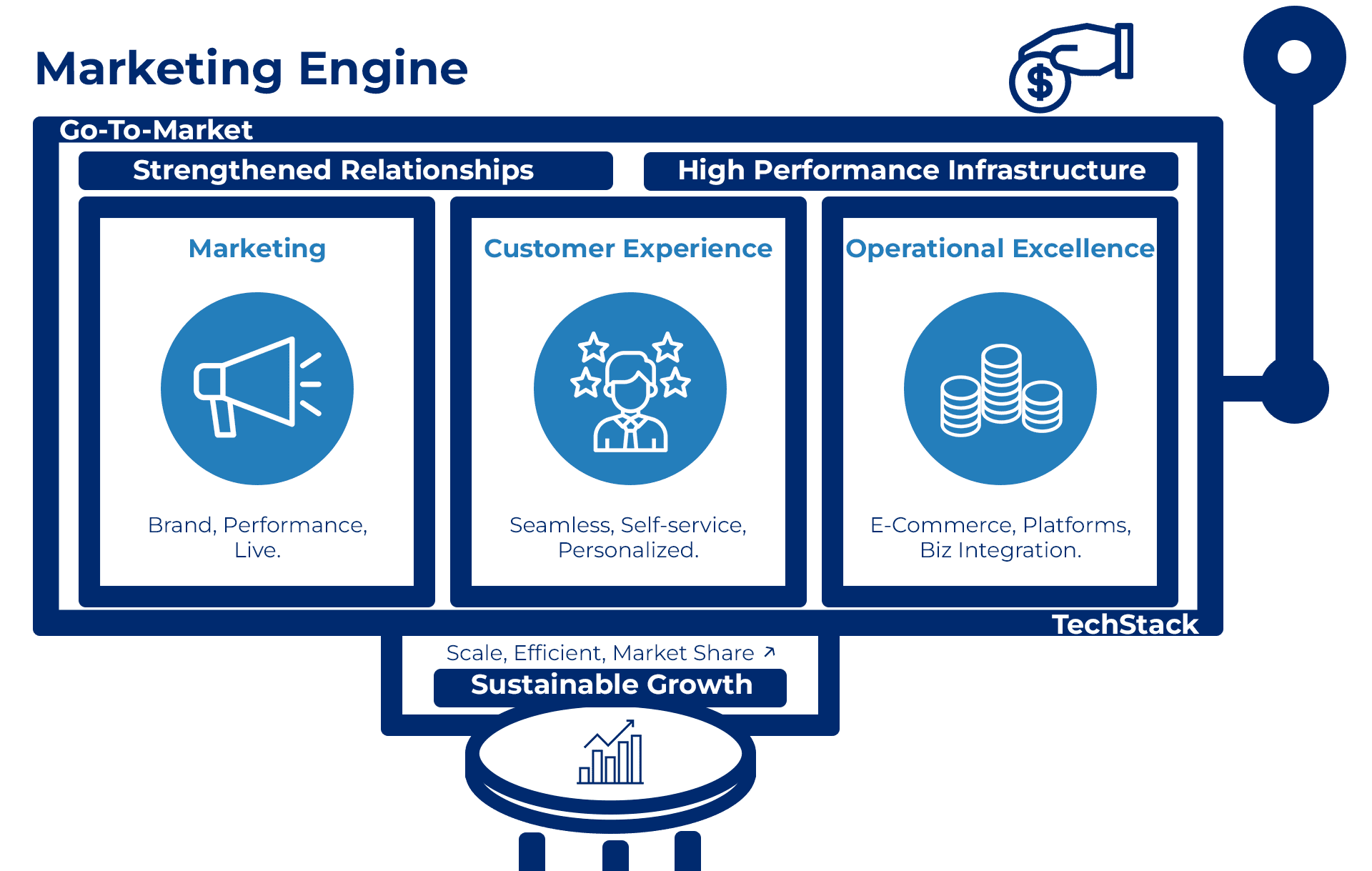
Henryk Börngen: For some time now, I’ve been wearing two hats. Under the first are the diverse marketing activities of the Automotive business unit for the business fields: Smart Mobility, Aftermarket, and Commercial Vehicles. This includes brand communication for our product brands ATE, Continental, and VDO; the trade and performance marketing activities of the multi-stage after-sales distribution; and live marketing with international trade fairs and (digital) customer events and webinars. Under the second hat are efforts to optimize the customer journeys as well as all customer touchpoints and the corresponding processes. This means expanding the go-to-market tech stack for eMarketing, eCommerce, and e(Self)Service.
René Kühn: When you talk to B2B marketers, it usually doesn’t take longer than 60 seconds before someone says “…in our change process” for the first time. Can you give us an insight into which key changes in marketing are currently the biggest challenges for you?
Henryk Börngen: I see several challenges here. For one, putting our customers much more at the center (outside-in view), viewing data as the “new currency” for offer and self-optimization. But also achieving the necessary balance between investment in MarTech and brand value, as well as being attractive to new talent and further developing capabilities in digital marketing.
René Kühn: Keyword MarTech. In your opinion, how are technologies and innovations in the software and tools space changing the game for B2B marketing teams? Where do you see the decisive advantages and benefits for your marketing?
Henryk Börngen: We’ve made it our mission to increase convenience for our customers, for example through better UX, self-service offerings, or SSO, and to further reduce our own costs for this through comprehensive digitalization and automation. In addition, we are pursuing additional revenue sources, such as further digital sales channels, so that we can also serve smaller customer accounts. Not to forget, data-driven optimization and reduction of customer acquisition costs, in an environment of rather rising advertising costs at Google, Facebook, and the like. The growth field of license or service business is enabled by the newly built service portals, where personalized offers and self-service drive new business and upselling.


 Top news from the Matchilla MatchZINE – the MarTech magazine