KI für dein Content-Marketing? Ein Status-quo-Bericht zu Generative AI
Der Wirbel um ChatGPT zeigt: AI-Autoren sind keine Zukunftsmusik mehr, sondern einsatzbereit für die Content-Produktion. In diesem…

wo unstoppable trends: on the one hand, Artificial Intelligence—of course, currently the MarTech topic. On the other hand, the spread of video content—a long-lasting trend that has picked up speed in recent months: all kinds of platforms are rolling out Story features or copying TikTok. Can these two developments be combined? Do AI and video go together? At the moment, there’s a lot of discussion about Generative AI in relation to text and image creation. But what about video production? Are AI video tools a replacement for real content creators? Are we entering a new era right now?
In this article, you’ll learn the status quo when it comes to Artificial Intelligence for your video activities.
Yes, AI tools for videos are already in use, but they support far more than just video production itself.
Video creation:
One of the most exciting current features of these tools is video creation. The program generates the desired videos based on predefined factors such as texts, descriptions, images, or graphics.
Post-production:
Post-production of a video can be very time-consuming depending on the project, as it includes not only video editing but also post-processing such as color correction or optimizing audio tracks. The AI video tools can not only finalize videos they created themselves, but also edit existing videos and raw footage.
AI video avatars:
Video avatars are also becoming increasingly relevant in the context of AI. They replace people in front of the camera and can be generated both as fictional characters and as AI-based versions of real people. The AI can capture both appearance and voice, creating an image of a real person that is as accurate as possible. This makes AI video avatars suitable for a wide range of video productions, including explainer videos and paid advertising.
Context:
Although AI video tools can also handle more complex projects, they sometimes lack an “understanding” of the actual context of the video and the target audience. Small differences in language, which significantly influence the impact of the video, still pose a major challenge.
Quality control:
Just like humans, AIs also rely on continuous learning. This means they can produce large amounts of video content, but that doesn’t always come with a feel for quality. Therefore, human intervention in video production is still often necessary to ensure content quality.
Requirements:
AI video tools may seem insatiable, but they have their artistic limits. Especially for agencies planning to use AI tools in video productions for clients, individual requirements and change requests cannot necessarily be implemented.
Creativity:
Opinions differ here. While some praise AI tools for their creativity, artists and designers in particular see the creative compromises. Complex and engaging storylines, unique and authentic characters, as well as unusual graphic elements can only be created by an AI video tool if it receives the necessary information and data in advance from humans.
On TikTok, Instagram, and the like, AI video tools are used in stories, reels, posts, and paid advertising.
Both internal and external explainer videos can be AI-generated. These include, among others, onboarding videos, safety videos, product videos, as well as instructional videos for staff or the target audience.
AI-generated motion graphics can also be animations that are used, for example, on the website, in social media posts, or for paid media. But AI-generated animations are also a useful solution for explainer videos, prototyping, and pitches.
In addition to classic 4D programs, AI video tools can help develop prototypes before the product goes into production.
To illustrate the concept and implementation of a project in a pitch, AI-generated videos can be used. They save financial and time resources and allow the most accurate possible representation of the idea.
The various AI video tools are characterized by different functions. Which tool is best suited therefore depends heavily on your use case.
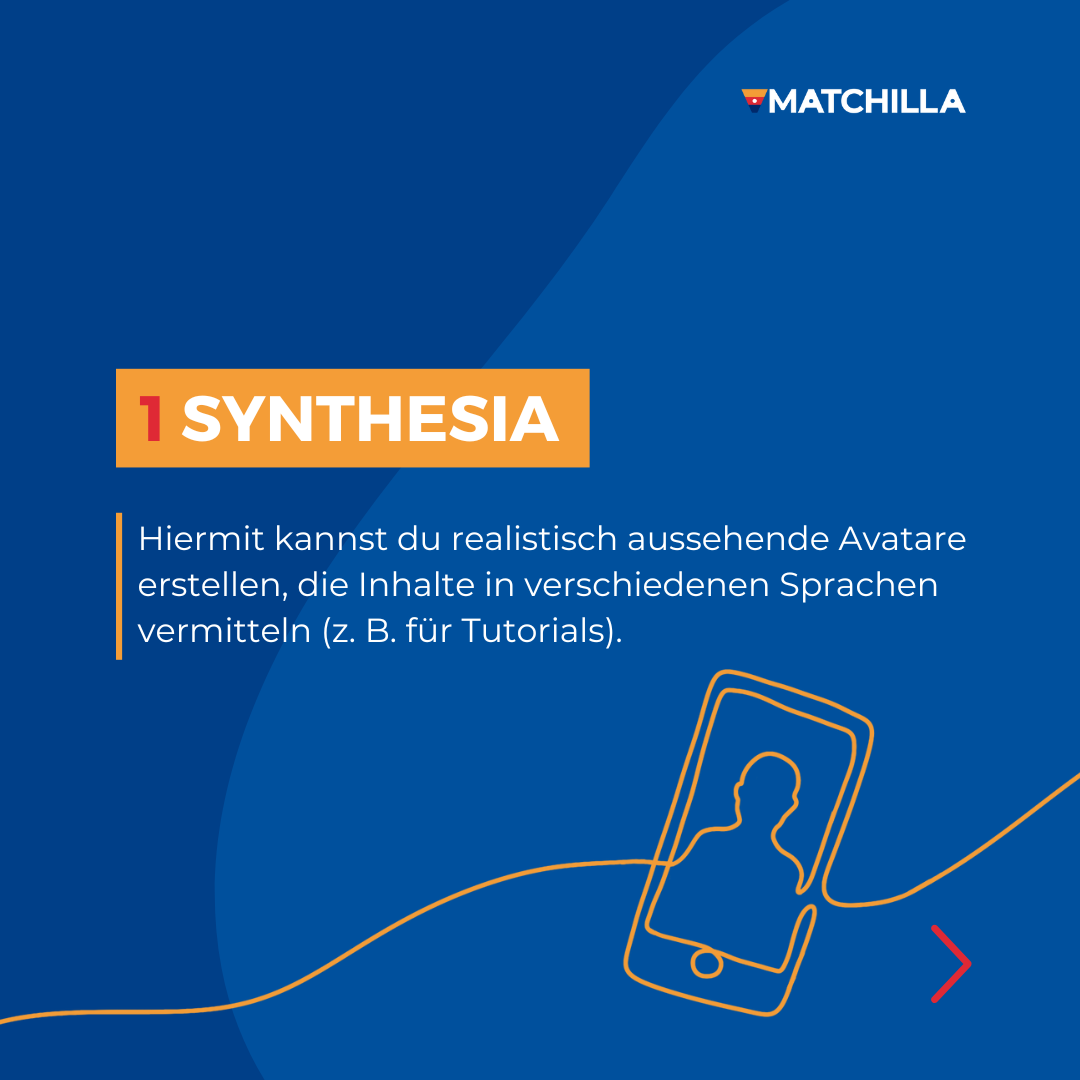
With this AI video tool, you can create realistic-looking avatars that deliver content in various languages.
This tool uses artificial intelligence to suggest the most suitable design and layout options based on video content.
This AI is one of the tools that generate videos by analyzing images and video content, which the new content is based on.
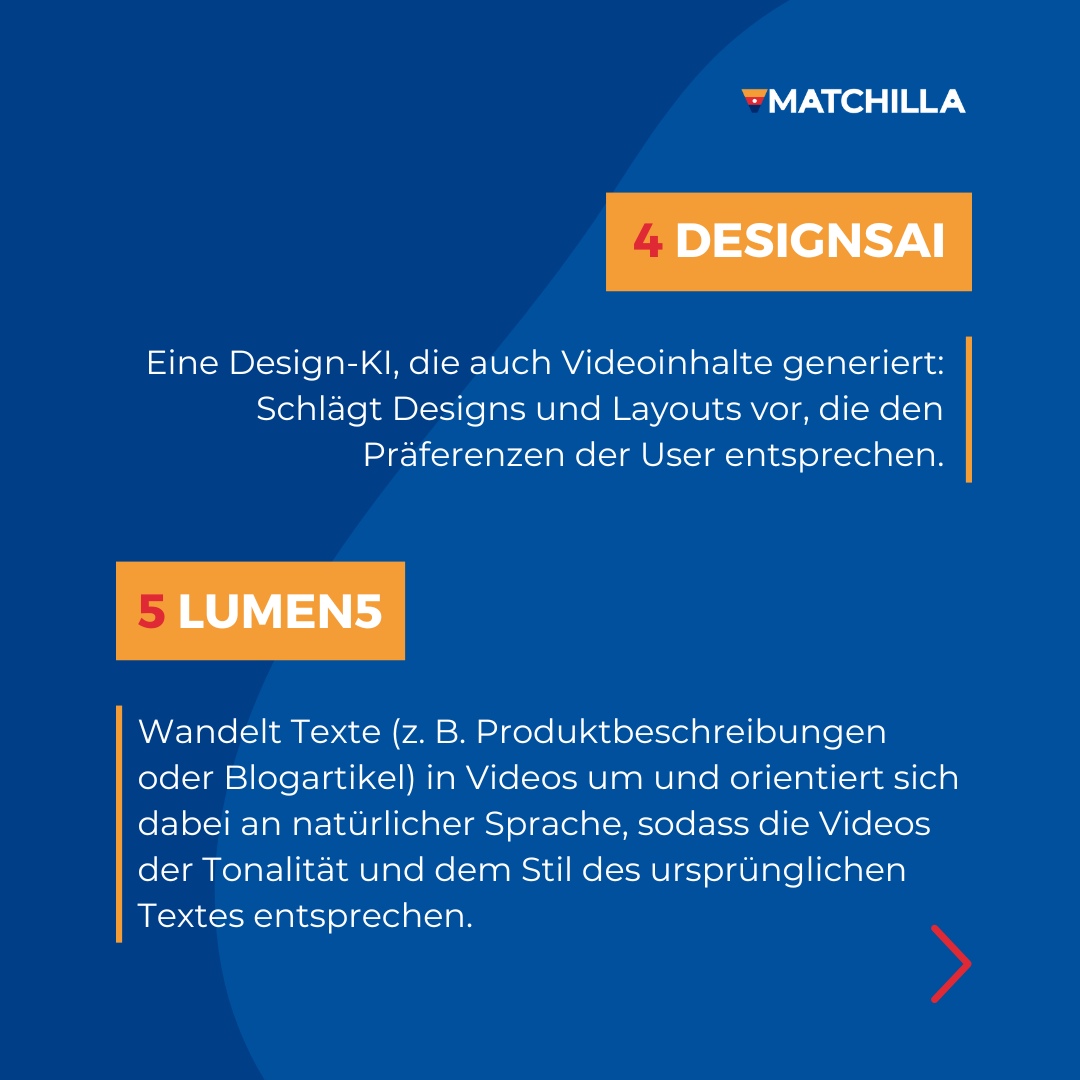
Although this is a design AI, DesignsAI is also capable of generating video content. Similar to InVideo, it is used to suggest designs and layouts that match users’ preferences. This makes it possible to create customized video content.
With this AI-powered platform, text-based content such as blog articles or product descriptions can be converted into videos. Since it is based on natural language, it can generate content in a way that matches the tone and style of the original text.
When it comes to creativity and customization, AI video tools still have to prove themselves. Complex projects in particular, which require a high level of detail and creative ideas, cannot yet be implemented with AI-generated videos – emphasis on “yet”!
This is exactly where developers’ focus will lie in the future. Because in the long run, AI is intended to replace as many areas as possible as successfully as possible. Even today, chatbots are as creative as nearly 90 percent of the population, as a study by Jennifer Haase of Humboldt University of Berlin and Paul Hanel of the University of Essex shows. While this is not AI-based video content, the trend will certainly soon also be reflected in moving images.
Alongside creativity, the personalization of video content will work better in the future. The tools may then be able not only to produce content, but also to analyze users’ data and behavior in advance and tailor the content accordingly.
Virtual reality and augmented reality could also benefit from AI video tools in the future – for example, through integration into applications to generate immersive and interactive worlds.
What until recently still seemed far off has now developed into one of the top topics in marketing: artificial intelligence. While image generation tools like Dall-e have been around for several years, the sudden success of ChatGPT in particular has given all AI disciplines a boost, including moving images. AI video tools will therefore continue to grow in importance in the future and will thus be increasingly tailored in ever more differentiated ways to the individual requirements of high-quality video productions.
Are you looking for suitable technology solutions that meaningfully complement your MarTech stack and improve your marketing? Use Matchilla’s matching platform to optimize your procurement process.
Instead of trawling through endless lists and visiting comparison portals, bring you together directly with three suitable providers. How? You submit a match request in just a few minutes: What are you looking for? What is particularly important to you? Where are your challenges? We compare this request with our database and present you with the three most relevant providers in your matchboard – in other words, a shortlist instead of many longlists. In the matchboard, you can compare everything at your leisure and ultimately make an informed decision. The entire matching process is free and non-binding.
Till Zier is CPO at Matchilla and, as a MarTech expert, reports in MatchZINE on news and trends in marketing, automation, analytics, and data.
Der Wirbel um ChatGPT zeigt: AI-Autoren sind keine Zukunftsmusik mehr, sondern einsatzbereit für die Content-Produktion. In diesem…

With a little help from my MarTech Consultant: In der modernen Marketingwelt mit tausenden von Software- und…

Ihr sucht nach einer Softwarelösung, um die diversen ESG-Anforderungen effizient zu managen? Wir erläutern Dir die wichtigsten…

Match me if you can!