Compliance-Software – Matching der besten Systeme und Tools
Ihr seid auf der Suche nach einem Compliance-Managament-System, das Eure Prozesse optimiert? Wir…

inding and transparent supplier relationships are a decisive competitive advantage in times of changing global markets, customs risks, as well as ESG and compliance requirements. A structured and efficient supplier relationship management setup to identify opportunities and risks is therefore currently one of the most relevant topics for SMEs.
An SRM software solution is almost indispensable for this, as it optimizes processes in supplier management, automates numerous workflows, and enables data-driven decisions.
In this article, we show you how a qualified SRM tool helps you manage your supplier relationships excellently, and we support you through our software matching in identifying the right providers according to your requirements.
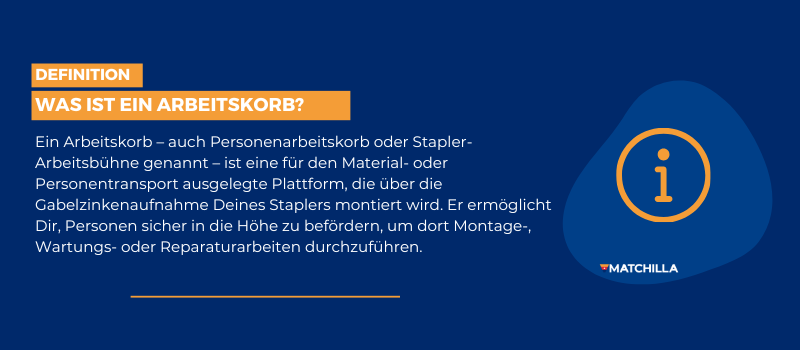
If you are already very familiar with forklift baskets, have heard about our free matching service, and want to start the selection process for a work platform based on your criteria right away, here’s a shortcut:
Working several metres above the ground is part of everyday life in many companies—whether during maintenance of warehouse lighting, repairs to pipework, or installing signage. Without the right work platform, this is not only inefficient, but also an unnecessary safety risk. A forklift work platform ensures that your employees work safely, ergonomically, and in compliance with legal requirements, and it is a budget-friendly option so you don’t have to invest in a separate aerial work platform right away.
The differences between the models are considerable: from simple, lightweight plug-in systems for occasional use to robust, bolted constructions for continuous operation. The choice depends directly on your forklift type, load capacity, and intended use.
New safety aspects (OSHA/ANSI) and the professionalisation of maintenance and facilities management for businesses and properties are ensuring that sales of work platforms are increasing.
Purchasing development to influence it significantly positively.
Let’s start the selection process for a work platform that fits your requirements with a market overview for Germany, Austria and Switzerland.
The market for work baskets in the DACH region is diverse and ranges from specialized metal fabricators to large industrial manufacturers with international distribution. The spectrum covers standard solutions for occasional use as well as highly specialized systems for permanently demanding work environments.
In Germany, Austria and Switzerland, the market can be broadly divided into three groups:
Dealers and importers
with a broad product portfolio who bundle models from various manufacturers, distribute imported goods from Asia or overseas on the DACH market and often also provide technical advice.
Specialist designers for work baskets, who develop individual solutions when standard models do not meet the requirements of special projects.
For procurement professionals and operations managers, this means: the range of options is large, but making the right choice requires technical understanding. Anyone who wants to quickly find the right work basket must specifically compare technical specifications, approvals, and delivery times in the selection process – this is where platforms like Matchilla have the advantage, as they have already pre-qualified the market and match with the right providers. .Quality Management
The terms Supplier Relationship Management (SRM) and Supply Chain Management (SCM) are often used interchangeably when searching for software, but they refer to different concepts—and therefore different types of software and functionalities. A brief distinction for clarification:
Supply Chain Management covers the holistic planning, management, and optimization of all processes along the supply chain—from raw materials to the finished product at the end customer. This includes demand planning, logistics and transportation, warehousing, production control, supplier coordination, and risk management.
Supplier Relationship Management focuses on the strategic and operational handling of suppliers—i.e., the “human” part of the supply chain.
The fact that one of the most frequent match requests on our platform is the search for an SRM tool in combination with supply chain management software is only consistent and advisable, given the many content overlaps and opportunities for complementing each other.
For mid-sized companies in particular, however, it makes sense to start with one of the two types of software first in order to keep the initial effort as low as possible. Nevertheless, to design supply processes as efficiently as possible, it is only beneficial—when selecting a solution for Supplier Relationship Management—to also review potential SCM options in parallel, even if their use is initially only planned for the future.
In a nutshell: SRM software creates the foundation for a collaborative and mutually beneficial partnership with your suppliers—based on the shared goal of achieving the greatest possible economic benefit through strategic cooperation.
Let’s take a closer look at the core functions of an SRM tool:
Supplier evaluation and performance analysis
Supplier evaluation is one of the core functions of SRM software. It makes it possible to objectively assess supplier performance. This goes far beyond merely checking delivery times, product quality, or catalog data—SRM software also takes into account factors such as customer service, capacity for innovation, sustainability practices, and flexibility in adapting to changing market conditions. With this holistic perspective, companies evaluate not only the current status of their suppliers, but also assess their potential for future developments and partnerships. Suppliers know that their performance is regularly evaluated, which motivates them to continuously improve their standards and align more closely with shared goals.
Practical example
A mid-sized mechanical engineering company sources precision parts from several international partners. Since introducing an SRM software solution, it no longer only checks whether the required parts arrive on time. Instead, the company also evaluates the supplier based on service, response times, flexibility, and sustainability.
In doing so, it notices that while a main supplier delivers reliably, it tends to leave technical inquiries unanswered. A smaller supplier, on the other hand, responds quickly, thinks along when special requests arise, and contributes new ideas — and does so with certified sustainability standards.
Centralized contract and document management
The SRM software provides a structured and efficient way to manage all relevant agreements and documents related to supplier relationships. It ensures that all contract documents are centralized, easily accessible, and organized in a transparent system so that no important deadlines or agreements are overlooked. Automating processes with an SRM tool also makes it possible to provide timely reminders of upcoming contract renewals, notice periods, or necessary adjustments. This prevents gaps in contracts and ensures that contract negotiations are prepared early on. At the same time, real-time document management reduces administrative effort, as all relevant documents — from orders and delivery terms to invoices and legal agreements — are stored in one place and can be accessed at any time with just a few clicks.
Another advantage: With an SRM software solution, both parties have access to the same information at all times and can respond quickly to any discrepancies or changes, which also directly supports audit-proof compliance documentation. This not only makes ongoing collaboration easier, but also promotes overall transparency.
Practical example
An electronics manufacturer works with more than 50 suppliers worldwide. In the past, contracts, price agreements, and delivery terms were scattered across local drives or email inboxes. Notice periods were often recognized too late, and renegotiations regularly happened only under time pressure.
By integrating an SRM tool, the company now has centralized contract and document management: All framework agreements, NDAs, price lists, and special terms are consolidated in one place, role-based, and accessible with just a few clicks. Automatic reminders indicate in good time when a contract is expiring or when a termination needs to be reviewed.
Improved and standardized communication
In an increasingly interconnected and dynamic business world, it is important to exchange information in order to respond to changes in a timely manner and to develop solutions together as quickly as possible. Emails or phone calls are often person-specific and can lead to possible delays and/or undocumented silo communication—especially when several people are involved or complex information is exchanged. SRM software provides a sustainable and effective solution through fast and direct communication channels that are specifically tailored to the needs of collaboration between companies and suppliers. Depending on the SRM tool, there are, for example, live chat or messaging functions. These make it possible to respond to inquiries immediately and to hold fast, traceable conversations. Whether it is confirming an order, clarifying technical details, or discussing delivery delays—the communication takes place in real time and is immediately visible to both parties. This is a crucial aid in avoiding errors, minimizing misunderstandings, and ensuring that everyone involved is always up to date.
Practical example
A company in the food industry sources packaging material from several suppliers. Agreements on delivery quantities, short-notice changes, or technical specifications were mostly handled via email—sometimes supplemented by phone calls. This repeatedly led to misunderstandings because not everyone was copied on the email or because agreements were not properly documented.
Since the introduction of SRM software, communication has taken place directly in the system via an integrated chat function. Buyers, quality management, and suppliers clarify follow-up questions on a shared platform, exchange file attachments, and comment on changes to specifications immediately. The best part: everything is automatically archived and can be viewed when needed.
Joint resource planning
Instead of working in isolation, a qualified SRM tool helps align goals, expectations, and resources with one another. This leads to a far more efficient and flexible supply chain. This proactive collaboration creates a solid foundation for a long-term business relationship and strengthens a strategic partnership that is based not only on short-term transactions, but on mutual trust and a focus on the success of both sides.
The advantage here: By sharing their delivery plans and timelines with each other early on, continuously adjusting them, and keeping the needs of both sides in mind, companies and suppliers avoid delays and bottlenecks in the supply chain. Suppliers manage production peaks better by communicating with companies at an early stage and adjusting delivery times in line with changed demand forecasts. SRM tools can be integrated into existing systems such as ERP and connected with additional software solutions. This reduces the risk of late deliveries, which are often associated with high costs and dissatisfied customers.
Practical example
A furniture manufacturer works closely with various wood and fabric suppliers. Especially during peak periods—such as ahead of seasonal collections or major orders—there used to be repeated bottlenecks because the increased demand was communicated too late. This led to delivery delays, expensive express orders, and dissatisfied end customers.
An SRM software solution has fundamentally changed this: the manufacturer shares its production and ordering plans early on directly via the system. Suppliers see the planned quantities, adjust their own capacities, and report bottlenecks directly on the platform. The tool automatically updates the schedule for everyone involved and enables better planning—even for special orders.
Feedback and development
An important goal of a successful supplier relationship is the ability to continuously improve and develop. An SRM system provides valuable support for this by facilitating continuous dialogue between companies and suppliers and creating a structured way to collect feedback and identify potential for improvement. This can be done, for example, through comprehensive surveys, rateable performance indicators, or direct feedback from suppliers and the procurement team. This structured process ensures that no important feedback is lost and that both the company and the suppliers gain clear insights into their performance and weak points. This helps companies respond quickly to negative trends and work with their suppliers on targeted solutions, instead of getting stuck in misunderstandings or delays.
Practical example
A medical technology manufacturer works with sensitive components where the highest quality standards are mandatory. In the past, feedback on deliveries was often provided only verbally or by email—often too late or documented in an unclear way.
With the introduction of an SRM software solution, that has changed: after each delivery, a short feedback form is automatically sent to the relevant departments. There, the responsible employees directly assess whether quality, packaging, and delivery dates were met, and provide suggestions for improvement and requests. At the same time, suppliers themselves have the opportunity to give feedback on ordering processes. Via the SRM tool, all feedback automatically flows into a clear evaluation. This allows the manufacturer to identify early on whether a supplier repeatedly has quality deviations or whether internal processes need to be adjusted.
It’s clear: SRM software is more than a one-dimensional tool that makes it easier for you to manage supplier relationships. Transparent and structured processes are strategic advantages for both parties and ensure efficiency, sustainability (in both senses of the word), and innovation.
Depending on the number of (critical) suppliers, establishing an SRM system requires investments from all parties involved in order to grow together and become more successful – and suitable software helps to get the best possible out of these aspects.
Suppliers are more than just vendors – they are strategic partners. A strong, well-maintained relationship with them can make the difference between smooth operations and costly problems. But in an increasingly complex and global economy, it’s no longer enough to manage supplier relationships manually. In addition, manual work is often time-consuming, chaotic, and unclear. This is where an SRM tool comes in.
Specialized SRM software helps manage supplier relationships efficiently, create transparency, and build sustainable partnerships.
By strengthening their relationship with suppliers, companies benefit from the following advantages, among others:
Suppliers who know a company well and recognize the value of the partnership are far more than mere vendors – they become strategic allies who play a decisive role when it comes to key competitive advantages. Thanks to a good relationship with the company, suppliers are often more motivated to respond flexibly and, even in challenging situations, to find a solution for all parties as quickly as possible. This responsiveness is a decisive competitive advantage. In time-critical or unexpected scenarios, it can make the difference between missed opportunities and a successful deal. Companies that actively invest in building close supplier relationships benefit from shorter response times, greater flexibility, and a collaborative partnership based on mutual understanding and trust.
Supplier Relationship Management in practice is based on openness and traceability. When your suppliers know exactly what is expected of them, how their performance is measured, and which criteria are crucial for successful collaboration, an environment of fairness and professionalism emerges. Transparency means that all parties have clarity about performance indicators, quality standards, and expectations at all times. This allows suppliers, for example, to understand why certain benchmarks are applied. This openness builds trust instead of mistrust – suppliers don’t feel monitored, but rather like valued partners working with the company toward long-term success. A qualified SRM tool helps create this transparency by evaluating KPIs, recording contracts, and helping define clear standards.
A deep understanding of operational workflows, production costs, and supply chain processes gives you the opportunity to identify cost-saving potential together with the supplier’s expertise and operate more economically. This does not mean increasing price pressure or cutting costs at the expense of quality – rather, it’s about leveraging interfaces, optimizing processes, and achieving sustainable savings that benefit both sides. This is only possible when there is healthy, transparent communication between the company and the supplier, and both sides speak openly about their needs and potential hurdles.
A better relationship between suppliers and companies means suppliers communicate more openly about potential issues before they escalate. After all, supply bottlenecks, delays, or financial difficulties can have significant impacts on the entire supply chain. Through regular exchange and joint optimization of production processes, the risk of defects or insufficient deliveries decreases accordingly. Even in unforeseen problems such as a sudden market change, companies with strong supplier relationships are more agile and resilient. This is because strong, stable, well-connected partners can, for example, respond faster to demand fluctuations and thus avoid shortages or excess inventory.
Of course, all of this can also be achieved using manual methods. By comparison, however, SRM software is a far more efficient solution for building a strong relationship between companies and suppliers. It enables seamless, transparent communication that makes it easier for both sides to respond quickly to changes and challenges in the supply chain.
Instead of lengthy manual processes that are on average 30% less efficient and cumbersome communication, a qualified SRM tool ensures smoother collaboration, strengthens mutual trust, and promotes a strong partnership that pays off in the long term. In a world increasingly shaped by digital connectivity, an SRM solution is therefore more than just a practical tool – it is a crucial building block for companies to remain flexible, agile, and future-ready.
The costs of supplier relationship management software vary, and although some tool providers communicate their licensing model transparently, they are not comparable when it comes to pricing due to the different components involved. Looking at past matchings for our platform users, we arrive at a wide range between 500 and 50,000 euros in monthly license costs.
Factors that most frequently influence the cost of SRM software are:
Purchasing volume and the structure of procurement
Required functions / modules
Number of access rights
Support and training services
Individual support
Integration into existing systems
The following table provides guidance on license costs as well as the initial implementation effort (including internal project costs), which we derived from around 20 customer matchings:
The investment in an SRM software solution may seem high at first glance, as no immediate cost reduction is apparent. However, using a practical example, it can be shown that the investment can pay for itself very quickly. Let’s use the following scenario as a guide:
A company with 300 employees has so far managed its supplier relationships manually using spreadsheets and email communication. This results in long processing times, a lack of transparency, and inefficient ordering processes.
The result: Incorrect data leads to higher purchasing costs and makes strategic supplier evaluation more difficult.
After implementing an SRM software solution for €5,000 per month (€60,000 per year), around 10% of annual procurement costs can be saved through optimized processes and automated workflows. With a purchasing volume of €5 million, this corresponds to €500,000 per year.
➡ Savings potential: €41,666 per month or €500,000 per year
➡ Software costs: €5,000 per month or €60,000 per year
➡ ROI from year 2: Over 800% – the software clearly pays for itself!
This simple calculation is just one example, but it clearly shows: An SRM software solution is not just a cost factor, but a strategic investment. A well-implemented SRM tool significantly improves procurement processes. Companies can substantially reduce their procurement costs through better negotiating positions, optimized supplier relationships, and automated processes. In many cases, annual spending on suppliers can be reduced by around ten percent.
Our recommendation: Fill out our Match Assistant below so that your company can also benefit from the advantages of a suitable SRM software solution. You will receive a non-binding budget estimate from the software providers that best match your company’s needs.
The market for SRM software is dynamic and includes both large, established providers and innovative start-ups with specialized solutions. In the DACH region alone, around 40 providers can be considered relevant, and researching the right tool is therefore opaque and time-consuming. The good news: We know the SRM software market and support you with our software expertise in making the selection!
With our matching process, we offer you a structured and effective method for finding the right SRM software solution for you. To do so, we draw on experience from over 700 matchings for mid-sized companies and corporations, as well as a unique database of functions, interfaces, industry expertise, prices, and much more on the respective tool solutions.

After entering your criteria in the Match Assistant, a shortlist (we call it the Matchboard) determines which three providers best fit your situation. You then choose for yourself which tool you would like to take a closer look at during the offer phase.
The best part: This individual software comparison is non-binding, free of charge, and anonymous to providers for you.
Would you like to find out which SRM software can best support you in optimizing your supplier relationships? Then take a few minutes and fill out our SRM Match Assistant below, or register on the Matchilla platform!
We look forward to matching with you!
Providers in matching: 29

Matchilla’s approach is brilliant: I no longer have to laboriously research consultants and software providers or fight my way through countless comparison portals—the right providers come to me, so to speak, with just a few minutes of effort. The matching process saves us a lot of resources.

Searching for suitable ESG service providers via Matchilla is simple and super-fast. We made contact, formulated the specifications, and within a few days the results were there. This way we got information on providers we hadn’t even heard of before. Real added value.

The short and clear communication channels at Matchilla convinced me: our specific needs are understood immediately, analyzed perfectly, and matched with the right providers in a short time. Matchilla’s platform works quickly, is straightforward, and guides you precisely through the service provider selection process.
We explained in detail in this article what you need to consider when choosing a suitable SRM software solution: the research into vendor options and the selection process are complex and time-consuming.
We have already successfully carried out the structured matching process that you go through with us for many strategic buyers at mid-sized companies and corporations, so we know virtually every possible constellation when searching for suitable tool providers. Thanks to the large number of matchings already completed, our internal data basis is unique and not available in any AI.
With this market overview combined with our personal expertise in the software sector, you gain an immense knowledge advantage that not only saves you cumbersome research work, but also guides you to the right provider via the Matchilla platform in a structured selection process.
The Matchilla service is free of charge, non-binding, and anonymized vis-à-vis the providers. The individualized assessment to select the best software for you, as well as the provision of extensive background information, is financed via the providers’ platform fees. In general, we are not in any paid contractual relationship with you. You are always in control of the selection process, as well as ending the matching process at any time.
Simply start by filling out the Match Assistant. This gives us an initial insight into your requirements. We will get in touch with you personally if further specifications are needed, although in our experience additional coordination is necessary for SRM matchings. So feel free to block 15 minutes for a clarification call with Matchilla 😉
In this way, we refine the selection criteria and feed additional individual decision factors beyond the standard data into the matching. Based on the aggregated information, we create the matchboard on our platform with the tool providers most relevant to you.
The Matchilla platform can be used for an official tender for supplier relationship management software. In addition to the existing information about the providers, you collect the corresponding offers directly on the Matchboard. Using the Invite function, you then share all information not only with procurement, but optionally with all process stakeholders in the company.
With this approach, Matchilla creates an individual vendor competition for your specific matching request, making prices more comparable and negotiable for you. Procurement, your boss, and your own budget will all be happy about that!
The selection process is based on an efficient interaction of data, algorithms, and a healthy portion of personal expertise. No Matchboard is released without one of our experts adding their own input.
Think of Matchilla as a neutral sparring partner in this software selection process. We want your company to continue using the services of the Matchilla platform for many more future searches for service providers. That’s why we’re highly interested in ensuring that you not only have access to an excellent procurement process, but that you also ALWAYS find the best possible providers through us.
Try it/us with no obligation – we’re looking forward to matching with you!
René Kühn is the founder and managing director at Matchilla. Together with his team, he has built one of the best market overviews for GRC, ESG, and procurement service providers on the matching and procurement platform.
Ihr seid auf der Suche nach einem Compliance-Managament-System, das Eure Prozesse optimiert? Wir…
Ihr wollt die wachsenden Aufgaben im Risikomanagement durch eine (neue) ERM-Software professionalisieren? Das…
Ihr seid dabei Euch auf die Anforderungen des BFSG vorzubereiten und sucht nach…